Learning from the Home Upgrades Program: Energy efficiency as a tool for unlocking community benefits
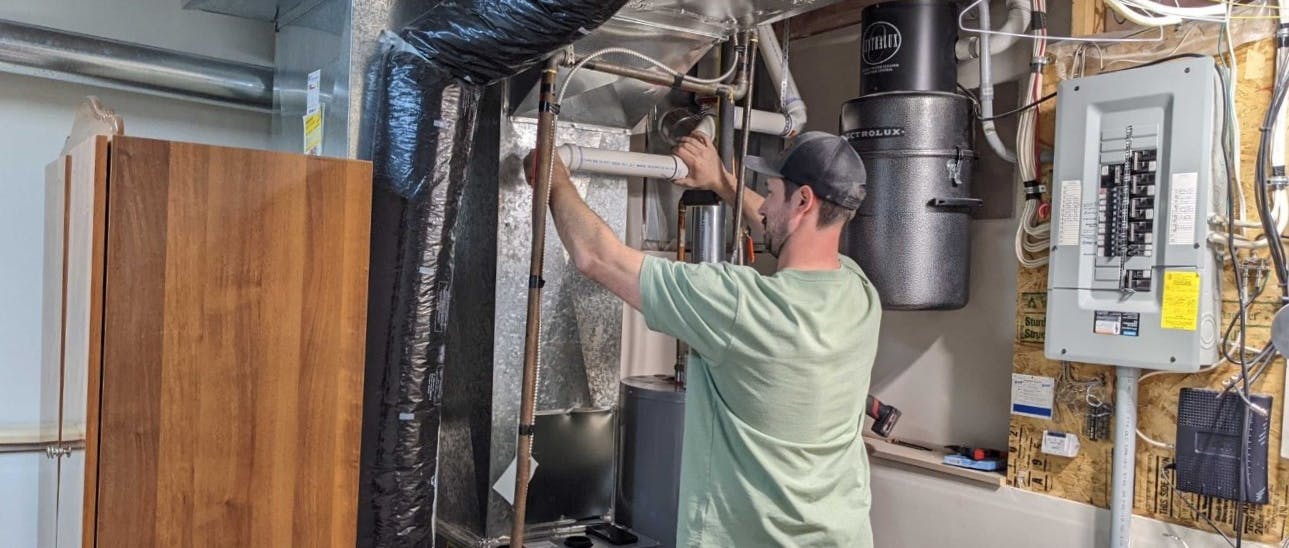
Photo credit: Kambo Energy Group
Alberta Ecotrust partnered with Kambo Energy Group to deliver the Home Upgrades Program (HUP) from spring 2023 to spring 2025, upgrading homes across Calgary, Edmonton, St. Albert, Canmore and Pincher Creek.
HUP is Alberta's first program of its kind and provides fully subsidized upgrades to lower-income households. The team developed, designed and delivered the program with the community at the centre, integrating accessibility and equity principles to meet participants where they were.
Over 300 qualified households received free energy-efficiency education and home improvements tailored to their home’s specific needs. These upgrades included insulation, air sealing, high-efficiency furnaces, and window replacements. HUP created holistic impact and demonstrated that intentionally designing solutions to complex challenges can achieve multiple objectives and community benefits, including:
Reduced energy consumption through improved home energy efficiency
Improved household affordability through decreased utility bills and maintenance costs
Enhanced comfort and safety for household members
Lower greenhouse gas emissions from upgraded households
The program also highlighted the issue of energy poverty—commonly defined as spending more than six per cent of household income on energy bills—which currently affects approximately 16 per cent (261,750) of Albertan households. With high energy costs burdening so many Albertans, the need to continue scaling and expanding this work is imperative. The insights gained and outcomes achieved through the design and implementation of the Home Upgrades Program present a unique opportunity to inform ongoing income-qualified programming and equity-focused efforts in Alberta. A snapshot of our learnings appears below.
What we learned
Household benefits beyond utility bill savings: Utility savings help ease the energy burden, but the program’s real value comes from additional benefits, such as avoiding future asset renewals and reducing home maintenance costs.
We can’t compare apples to oranges: Equity-centred programs often cost more to deliver due to the comprehensive support they provide to participants, and they should not be directly compared to conventional rebate or financing programs. HUP demonstrated the value of equitable programs and showed that teams must intentionally design programs around community needs.
Inclusion of health and safety considerations is key: Programs must include health and safety measures, such as asbestos abatement and ventilation improvements, as eligible upgrades. This inclusion ensures that more households can participate, even when homes require remedial work before installing energy-efficiency upgrades.
Key recommendations for future programs
Here are a few key ideas that can position future programs for success:
Centre multi-solving and co-benefits of income-qualified programs: Program designers should rethink how they position programs by leading with the most significant benefits, such as avoiding asset renewal costs and reducing home maintenance costs, which matter most to lower-income households. While emissions reductions and monthly bill savings remain important, reframing holistic program benefits can better demonstrate the true value of income-qualified programs.
Seek to establish sustainable funding while leveraging multi-funder models: A multi-funder approach enables holistic program design and flexible budget allocations, including funding for health and safety upgrades. Stable, sustainable base funding from utility systems, all levels of government, and various departments (social services, environment/climate, housing) is crucial to reaching more households experiencing energy poverty and avoiding boom-and-bust cycles.
Leverage community connections and other sectors and programs: Build strong community partnerships, including with utilities and community groups, to support effective outreach and build trust.
Ensure accessibility and education are integrated: Design programs to be no-cost and turnkey, with built-in supports that address diverse participant needs and accessibility requirements.
Further understanding of energy poverty in Alberta: Alberta needs more data on energy poverty among rural residents and those in remote communities, including lived experiences.
You can read our Learning Report for the complete program results, learnings and recommendations. As we reflect on the Home Upgrades Program’s impact and look ahead, strong interest from government, utilities, businesses and non-profits is creating a promising path to improve energy affordability and climate equity for Albertans facing energy poverty.
Related posts
Explore our most recent posts.